


NG/LNG This Week’s Drivers and the Look Ahead | 5.31.26

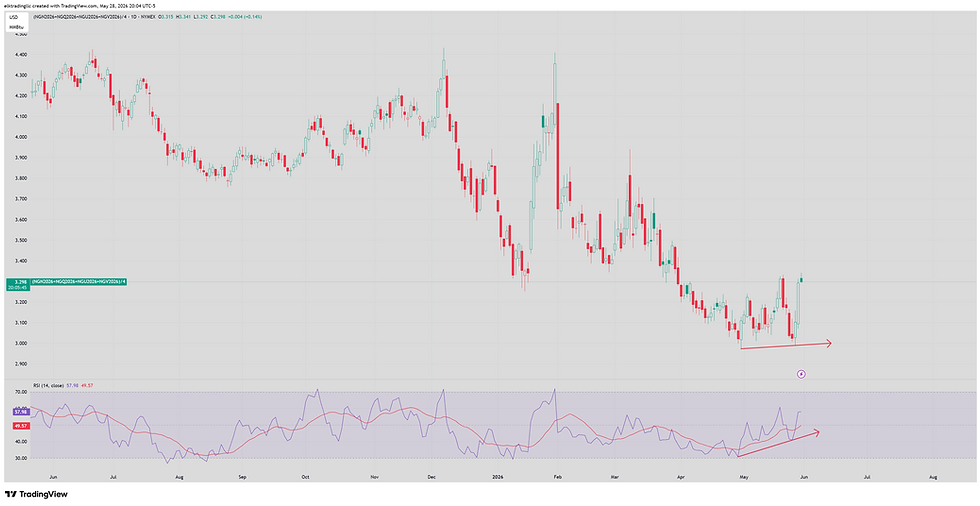
This Week’s Drivers
Natural gas markets remained volatile this week as traders balanced supportive storage data against moderate weather-driven demand. The EIA storage report came in largely in line with expectations, but the injection was viewed as bullish relative to both last year’s build and the five-year average, signaling tightening market fundamentals beneath the surface.
The expiration of the June NYMEX natural gas contract added another layer of short-term volatility as traders repositioned ahead of peak summer cooling demand. Moderate temperatures across much of the U.S. limited stronger power burn demand, helping cap upside price momentum during the week.
At the same time, LNG feedgas demand remained constructive as several Gulf Coast export facilities moved closer to completing spring maintenance programs. Domestic production also remained relatively strong, though ongoing pipeline constraints and maintenance activity continued to impact regional flows.
Globally, European natural gas prices stayed supported as storage injections continue to trail historical refill rates. Asian LNG demand also began improving as warmer summer temperatures approach across key importing regions.
The Look Ahead
June 1 officially marks the start of the Atlantic hurricane season, though forecasts are increasingly calling for a below-normal season due to developing El Niño conditions across the Pacific. Even with lower storm expectations, Gulf Coast LNG facilities, pipelines, and offshore production will remain closely monitored for any tropical disruptions during peak summer demand.
Temperatures across the U.S. are beginning to rise, increasing expectations for stronger cooling demand and higher power burns through June and into summer. LNG export demand is also expected to strengthen as more U.S. export facilities return from maintenance and ramp utilization higher.
Globally, Europe’s slower storage refill pace remains a supportive factor ahead of winter preparation season. In addition, the EU’s phased restrictions on Russian LNG imports are beginning to reshape global trade flows, with a broader permanent ban targeted for 2027.
Geopolitical uncertainty also remains elevated as U.S.-Iran negotiations continue, keeping global energy supply risks firmly in focus.
Meanwhile, confidence in long-term LNG demand growth remains strong. Several U.S. LNG projects either reached Final Investment Decision or secured construction timeline extensions this week, reinforcing America’s expanding role as the world’s leading LNG supplier.
Links:


Comments