


Winter Storms URI and ELLIOTT: Atmospheric Drivers and Energy System Impacts

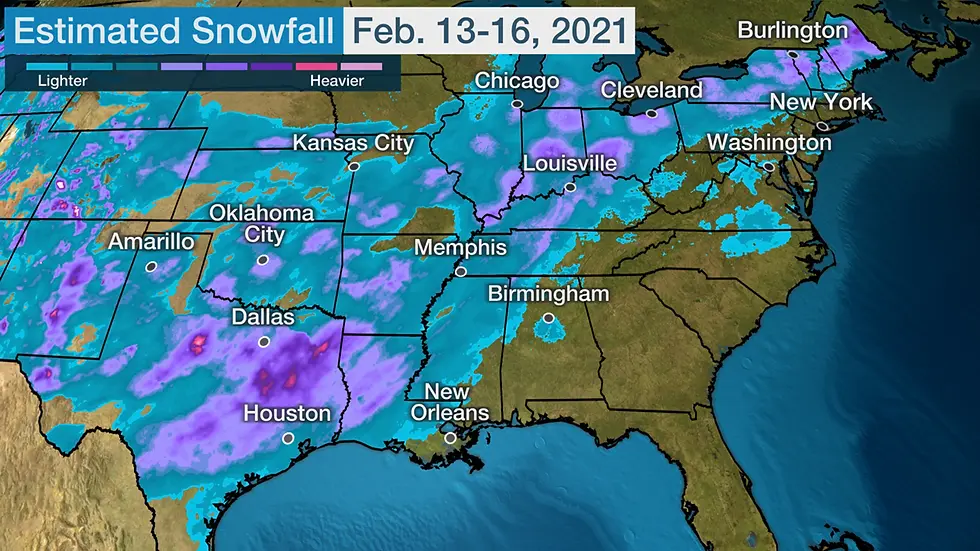
Winter storms Uri (Feb 2021) and Elliott (Dec 2022) were extreme cold events with distinct atmospheric mechanisms but similar outcomes: systemic stress on U.S. energy and infrastructure.
Uri: Polar Vortex Disruption & Persistent Blocking
Uri’s severity was tied to a major stratospheric sudden warming (SSW) that destabilized the polar vortex, producing a record-tying negative Arctic Oscillation (AO). This amplified jet stream undulations and established a blocking ridge over the western U.S., funneling Arctic air deep into Texas and the South. Subfreezing temperatures persisted for days (Austin bottoming near 6°F), compounded by snow and ice. A surface low (~992 mb) reinforced the cold outbreak. The persistence of the cold stressed ERCOT’s grid as generation (gas, coal, wind, nuclear) faltered under freeze-offs while demand surged.
Elliott: Rapid Cyclogenesis & Broad Geographic Reach
Elliott evolved via bombogenesis, with central pressure dropping >24 mb in <24 hours. This “bomb cyclone” was less about AO phase and more about the baroclinic clash of Arctic and subtropical air masses. Its hallmark was rapid onset: 30–50°F temperature crashes in hours, coupled with expansive wind fields (gusts >70 mph) and blizzard conditions. Impacts stretched coast-to-coast—from blizzards in the Midwest to freezes in Florida. Texas again faced extended subfreezing temperatures, with natural gas supply constraints echoing vulnerabilities exposed during Uri.
Contrasts & Implications
Uri: SSW-driven, quasi-stationary, long-duration cold.
Elliott: Baroclinic-driven, explosive deepening, wide-area high winds.
Both events demonstrate how different synoptic-scale mechanisms can yield similar stress outcomes: fuel supply disruptions, grid instability, and cascading failures in critical systems. With climate variability influencing jet stream behavior and storm intensity, resilience planning must integrate grid weatherization, renewable/demand-side flexibility, and cross-sector risk management.
Sources: NOAA, NCEP reanalysis, historical storm data


Comments